
The Guardian of Stage Lighting: An In-Depth Analysis of IP Waterproof and Dustproof Ratings to Ensure Your Performance Goes Without a Hitch
Introduction
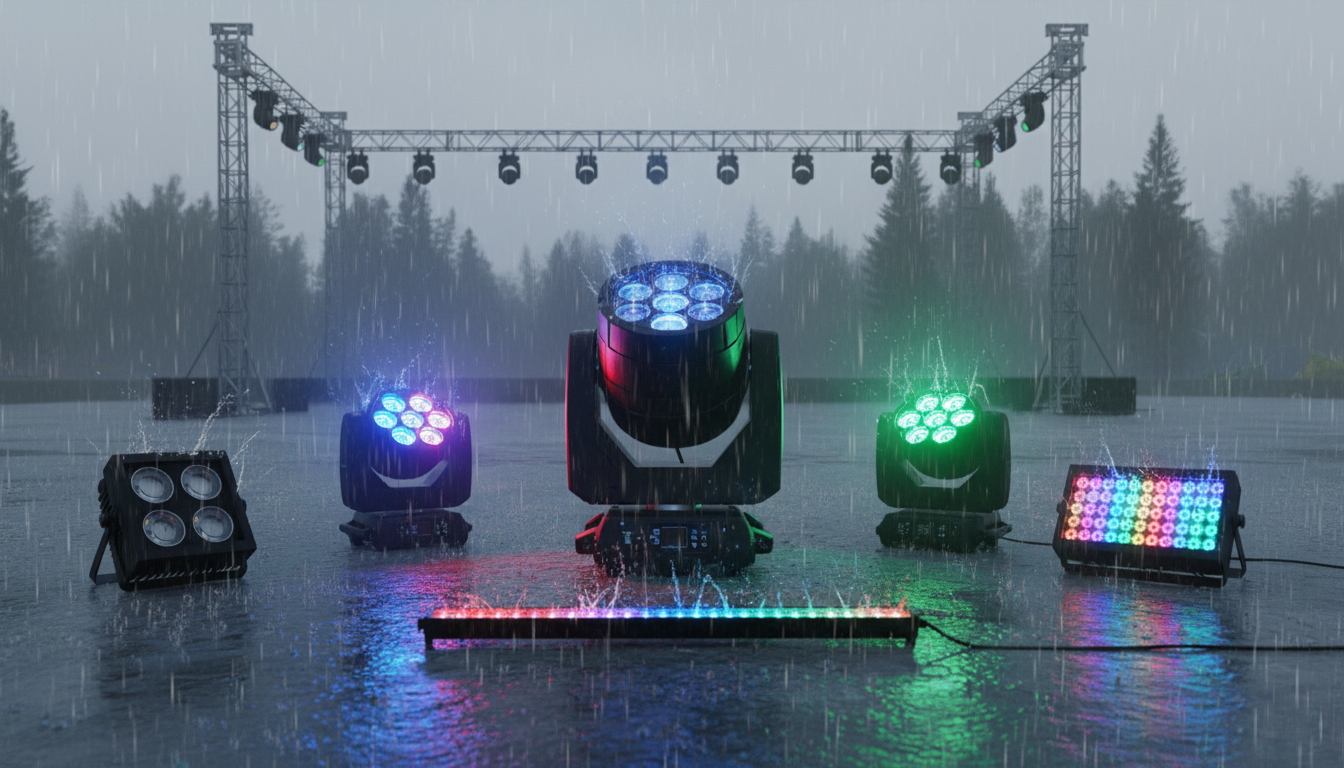
Imagine an exciting scenario: at a large-scale outdoor music festival, the headlining band takes the stage, and the crowd’s cheers echo through the air. Just then, the sky suddenly pours down with heavy rain. Will this highly anticipated light show turn into a dangerous, chaotic disaster due to rain intrusion, or will it shine fearlessly despite the wind and rain? The key often lies in two simple numbers — the IP rating.
In professional fields like live performances and permanent lighting installations where failures are unacceptable, equipment malfunctions are absolutely intolerable. Rainwater, dust, moisture, and even cleaning staff with high-pressure water guns pose constant threats to precision stage lighting equipment 1. The IP (Ingress Protection) rating system is the industry’s universal standardized language for quantifying a device’s ability to resist environmental factors. Unlike vague marketing terms such as “waterproof” or “weather-resistant,” IP ratings are precise certifications based on strict international testing standards .
This article aims to serve as an authoritative guide for stage lighting professionals. It will deeply decode the IP rating system, convert its technical parameters into practical application strategies for real-world scenarios, reveal the serious risks of incorrect selection, and provide best practices for installation and maintenance to ensure long-term reliable operation of equipment.
1. Demystifying Misconceptions: The True Meaning of IP Ratings
IP ratings are not just a technical parameter of a product, but the cornerstone of safety, reliability, and quality assurance for professional-grade equipment.
Definition & Standards
The full name of IP rating is “Ingress Protection Rating,” defined by the IEC 60529 international standard issued by the International Electrotechnical Commission, which is also equivalent to the European standard EN 60529 4. This system is designed to provide a clear, quantifiable classification of the ability of electrical equipment enclosures to resist the intrusion of solid foreign objects (such as dust, dirt) and liquids (mainly water) .
The Dual Purposes of Protection
The IP rating standard was designed with two core levels of protection in mind:
- Equipment Protection: Its primary function is to protect sensitive electronic components inside the equipment, such as circuit boards, motors, and optical components, from the intrusion of harmful substances in the environment, thereby preventing equipment damage and performance failures .
- Personnel Protection: Equally crucial, the standard also evaluates the enclosure’s ability to prevent human contact with hazardous internal components (such as live conductors, moving parts) . For example, an IP2X rating explicitly requires the enclosure to prevent objects larger than 12.5 mm in diameter (such as fingers) from entering, which is a basic requirement to ensure the safety of technicians and users.
Therefore, it is incomplete to understand IP ratings merely as “dustproof and waterproof.” In fact, it is a comprehensive safety and durability rating. Even for IP20 fixtures used in dry indoor environments, the “2” protection level assumes the critical safety function of preventing accidental electric shock.
Manufacturer’s Responsibility & User’s Protection
Obtaining an IP rating is not a manufacturer’s self-declaration; instead, products must be sent to professional laboratories for rigorous, repeatable testing in accordance with the IEC 60529 standard to obtain certification . This process provides users with a reliable guarantee of quality and performance, ensuring that the purchased equipment can operate safely and stably in its intended environment .
For lighting designers, project managers, and show producers, the significance of IP ratings goes far beyond a technical feature. It is a key risk management tool. Before the popularization of the IEC 60529 standard, purchasing “weather-resistant” equipment largely relied on trust in manufacturers’ marketing claims, which was full of uncertainties. Today, by specifying clear IP ratings, purchasing decisions have transformed from a gamble into a data-driven precise risk assessment. Choosing the correct IP rating means proactively managing financial risks (protecting expensive equipment investments), operational risks (avoiding show interruptions), and legal risks (ensuring on-site personnel safety).
2. Decoding the IP Code: The Secret Behind the Numbers
An IP rating consists of the letters “IP” followed by two digits, such as IP65. The first digit indicates protection against solids and dust, while the second digit indicates protection against liquids. Generally, a higher number means a higher level of protection .
In some cases, the position of a digit may be replaced by the letter “X,” such as IPX7. This does not mean the device has no protective ability; instead, it indicates that the device has not been tested or rated for that specific category (in this case, solid protection) .
First Digit: Dust & Solid Protection Levels (0-6)
This digit describes the enclosure’s ability to prevent the intrusion of external solid objects, ranging from preventing large-area human contact to completely blocking tiny dust particles.
- IP0X: No protection.
- IP1X: Prevents entry of solids larger than 50 mm in diameter, such as accidental contact with palms.
- IP2X: Prevents entry of solids larger than 12.5 mm in diameter, such as fingers. This is the common safety baseline for indoor fixtures.
- IP3X: Prevents entry of solids larger than 2.5 mm in diameter, such as tools or thick wires.
- IP4X: Prevents entry of solids larger than 1 mm in diameter, such as most wires and screws.
- IP5X: Dust-protected. Dust cannot be completely blocked, but the amount of dust entering will not affect the normal operation and safety of the equipment.
- IP6X: Fully dust-tight. The enclosure is tested in a vacuum environment to ensure no dust can enter the interior. This is the gold standard for outdoor and harsh industrial environments.
The table below summarizes the meaning and application scenarios of dust protection levels in detail.
Table 1: Detailed Explanation of IP Dust & Solid Protection Levels
| Rating | Protected Against | Detailed Description | Stage Lighting Application Examples |
| IP0X | No protection | No special protection against solid foreign objects or human contact. | Open-frame structures or internal modules used only for component integration. |
| IP1X | >50 mm solids | Prevents accidental contact with hazardous internal components by large body parts (e.g., palms). | Large equipment used only in strictly controlled and protected environments. |
| IP2X | >12.5 mm solids | Prevents contact with hazardous internal components by fingers or objects of similar length. | Basic safety requirement for standard indoor fixtures (e.g., profile spots, fresnels) in theaters and studios. |
| IP3X | >2.5 mm solids | Prevents contact with hazardous internal components by tools, thick wires, etc. | Indoor equipment requiring higher protection levels or operated by non-professionals. |
| IP4X | >1 mm solids | Prevents entry of small objects such as most wires, screws, and insects. | Indoor humid areas (e.g., near fog machines) or semi-open spaces with many insects. |
| IP5X | Dust | Amount of dust entering is insufficient to affect equipment operation or safety. | Dusty indoor environments (e.g., warehouses, some industrial plants) or sheltered outdoor areas. |
| IP6X | Fully dust-tight | No dust entry, providing complete protection for internal components. | Professional fixtures used in dust-exposed environments such as outdoor music festivals, desert areas, and construction sites. |
Second Digit: Water Protection Levels (0-9K)
This digit defines the enclosure’s ability to resist intrusion by various forms of liquids, from vertical water droplets to high-pressure hot water jets.
- IPX0: No protection.
- IPX1: Protection against vertical dripping water (e.g., condensed water droplets).
- IPX2: Protection against vertical dripping water when the device is tilted at 15 degrees.
- IPX3: Protection against spraying water within a 60-degree angle range.
- IPX4: Protection against splashing water from any direction.
- IPX5: Protection against low-pressure water jets from any direction (e.g., washing with a water hose).
- IPX6: Protection against high-pressure water jets from any direction, capable of withstanding large waves on decks or high-pressure water guns.
- IPX7: Can be briefly immersed in 1 meter of water (usually 30 minutes) without water ingress.
- IPX8: Can be continuously immersed in water deeper than 1 meter; specific depth and duration are specified by the manufacturer.
- IPX9K: Protection against close-range, high-temperature (80°C), high-pressure (80-100 bar) water jet cleaning. This is one of the most stringent waterproof levels, commonly used in the automotive or food processing industries where frequent cleaning is required .
Table 2: Detailed Explanation of IP Water Protection Levels
| Rating | Protection Capability | Brief Test Conditions | Stage Lighting Application Examples |
| IPX0 | No protection | No waterproof protection. | Limited to dry indoor environments only. |
| IPX1 | Vertical dripping water protection | Vertical dripping water at a rate of approximately 1 mm/minute. | Indoor environments where condensation may drip from ceilings. |
| IPX2 | Dripping water protection at 15° tilt | Device tilted 15° in 4 positions, withstanding vertical dripping water. | Indoor environments that may encounter slight angled dripping water. |
| IPX3 | Spraying water protection | Water sprayed at 0.7 L/min within a 60° range of the vertical line. | Sheltered outdoor areas (e.g., under eaves) that can resist wind-driven rain. |
| IPX4 | Splashing water protection | Water splashed onto the device from any direction. | Semi-open spaces exposed to wind-blown rain, or indoor venues like nightclubs where liquid splashing may occur. |
| IPX5 | Low-pressure jet protection | Jet sprayed from a 6.3 mm nozzle at 3 meters, with a flow rate of 12.5 L/min. | Outdoor fixtures capable of withstanding heavy rain and standard water hose cleaning. |
| IPX6 | High-pressure jet protection | High-pressure jet sprayed from a 12.5 mm nozzle at 3 meters, with a flow rate of 100 L/min. | Areas exposed to extreme weather (e.g., heavy downpours), ship decks, or locations requiring high-pressure water cleaning. |
| IPX7 | Temporary immersion protection | Device immersed in 1 meter of water for 30 minutes. | Ground fixtures that may be temporarily submerged in standing water, or fixtures near water features. |
| IPX8 | Continuous immersion protection | Long-term immersion in water deeper than 1 meter (specified by the manufacturer). | Fixtures requiring long-term underwater operation, such as in fountains or swimming pools. |
| IPX9K | High-temperature & high-pressure jet protection | High-pressure jet of 80°C hot water sprayed at 10-15 cm distance, with a flow rate of 14-16 L/min. | Special applications requiring high-temperature, high-pressure disinfection or cleaning; rarely used in stage lighting. |
Source:
It is particularly important to note that the progressive relationship of protection levels is not absolute. A common misconception is that a product with a higher rating must be compatible with all lower-level protections. However, for water protection levels, a device that passes IPX7 (temporary immersion) or IPX8 (continuous immersion) testing is not necessarily guaranteed to pass IPX5 (low-pressure jet) or IPX6 (high-pressure jet) testing . This is because the sealing design for withstanding static water pressure (e.g., O-rings) differs in principle from that for resisting dynamic high-pressure water impact; the former may fail under the latter’s impact. Therefore, for fixtures that need to resist both rain冲刷 and potential standing water on the ground, manufacturers will conduct dual certification and mark them as IP66/IP67 to prove their ability to provide both types of protection .
3. Practical Application: Choosing the Right IP Rating for Different Stage Scenarios
Choosing the correct IP rating is a professional decision that balances protection needs, equipment costs, and maintenance convenience.
Indoor Controlled Environments (Theaters, TV Studios, Stadiums): IP20 – IP44
- IP20: This is the benchmark rating for most indoor fixtures. It provides no liquid protection, but its IP2X solid protection level effectively prevents objects like fingers from being inserted, meeting the basic safety requirements for use on protected lighting battens 10.
- IP44: For indoor areas with high moisture or particle risks, IP44-rated fixtures are recommended. Examples include areas near smoke or haze machines, locations prone to condensation, or nightclubs and concert venues with liquid splashing risks 22. The IPX4 rating provides additional protection against liquid splashes from any direction 18.
Outdoor Temporary Events (Music Festivals, Concerts, Corporate Events): IP54 – IP65
- IP54: Suitable for sheltered temporary outdoor scenarios, such as under stage canopies or inside tents. Fixtures in these locations will not be directly exposed to rain but may be affected by wind-blown rain splashes and on-site dust 22. IP54-rated fixtures are usually lighter than models with higher protection levels, which is an advantage for mobile shows requiring quick setup and teardown 22.
- IP65: The Industry Workhorse for Outdoor Applications. IP65 is currently the most common and versatile protection rating for professional outdoor stage lighting 10. Its success lies in the perfect balance between protection performance and practical needs:
- “6” stands for fully dust-tight: Crucial for dusty music festival venues, effectively protecting internal optical and mechanical systems 5.
- “5” stands for low-pressure jet protection: Sufficient to easily withstand various precipitation conditions, including heavy rain, ensuring uninterrupted performances 5.
Extreme Environments & Permanent Installations: IP66 and Above
- IP66: Suitable for occasions requiring resistance to extreme weather (e.g., typhoons), high-pressure water冲刷, or regular high-pressure cleaning. Examples include permanent building facade lighting, outdoor installations in theme parks, and deck performance areas on cruise ships 12. The key difference from IP65 is that IP66 can withstand the impact of high-pressure water jets 27.
- IP67/IP68: Designed specifically for applications involving water immersion. IP67 supports temporary immersion (1 meter water depth for 30 minutes), making it suitable for ground fixtures installed in water-prone areas or near water features 10. IP68 is used for scenarios requiring long-term underwater operation, such as lighting installations inside swimming pools or fountains 21.
- Special Consideration: Marine Environments: For installation projects in coastal areas or on cruise ships, a high IP rating alone is insufficient. Moisture containing salt in the air is highly corrosive. In such environments, in addition to an IP66 or higher rating, fixtures must also have a marine-grade anti-corrosion coating to protect the enclosure and metal components from rust 22.
However, blindly pursuing the highest IP rating is not always advisable. Achieving a high protection level relies on more complex and robust sealing structures, such as precision gaskets, sealed interfaces, and pressure balance valves. While this provides excellent protection, it may also increase the difficulty and time cost of daily maintenance. For example, operations like bulb replacement, internal lens cleaning, or gobo changes are more cumbersome on fixtures with high IP ratings. Additionally, overly tight sealing may affect heat dissipation efficiency 22. Therefore, a professional choice is to find the optimal balance between protection, maintainability, and heat dissipation performance while meeting environmental requirements.
4. The Cost of Wrong Choices: Potential Risks of Low IP-Rated Fixtures
In the professional lighting field, incorrectly selecting equipment with insufficient IP ratings leads to consequences far beyond just equipment damage; it may trigger a series of chain reactions, resulting in significant economic losses and serious safety hazards.
Immediate Equipment Failure & Financial Loss
- Circuit Short Circuits: Water is the nemesis of electronic equipment. Once moisture invades the interior of a fixture, it can easily cause a short circuit in the circuit board, instantly burning out core components and rendering the equipment useless 30.
- Bulb Explosions: For fixtures with traditional light sources, cold rainwater coming into contact with the surface of a high-temperature operating bulb causes severe thermal stress, which may lead to bulb explosion. The splashing glass fragments not only damage the fixture’s reflector and optical lens but also pose a risk of injury to nearby personnel 31.
Long-Term Performance Degradation & Reduced Lifespan
- Internal Corrosion: Even small amounts of moisture or condensation, if present in the equipment for a long time, can cause slow corrosion of circuit boards, interfaces, and mechanical components, leading to intermittent failures and eventually complete equipment breakdown 30.
- Dust & Dirt Accumulation: For fixtures with a dust protection rating lower than IP6X, dust, dirt, and smoke oil residues will continuously accumulate on internal optical components, cooling fans, and circuit boards. This significantly reduces light output efficiency, causes equipment overheating, and accelerates the wear of mechanical parts.
Serious Safety Hazards
- Electric Shock Risk: The combination of water and electricity is fatal. A fixture that leaks electricity due to water ingress may energize its metal enclosure or even the truss it is hung on, posing a serious electric shock threat to technicians, performers, or audience members who come into contact with it.
- Fire Risk: Circuit short circuits are a common cause of electrical fires. In any performance venue, this could lead to an irreparable disaster 33.
A seemingly minor wrong decision — using a cheap, under-IP-rated fixture in an exposed location — does not carry a linear risk. In modern lighting systems, all equipment is closely connected via power supplies and data networks (e.g., DMX). A short circuit in one fixture may cause the circuit breaker of the entire circuit to trip, extinguishing multiple fixtures simultaneously. Its data failure may also interfere with the entire control network, leading to large-scale lighting malfunctions 34. A show interruption caused by equipment failure not only incurs high repair and overtime costs but also severely damages the professional reputation of the production company and lighting supplier, with far-reaching and immeasurable negative impacts.
5. Extending Equipment Lifespan: Proper Installation & Maintenance of IP-Rated Fixtures
A qualified IP rating is a commitment made by the manufacturer when the equipment leaves the factory, and maintaining this commitment throughout the service life depends on professional, rigorous installation and maintenance.
Key Installation Practices
- Using Certified Connectors: No matter how high the IP rating of the fixture itself is, if non-waterproof power and signal cable connectors are used, the protection of the entire system is useless. It is essential to use dedicated waterproof connectors with IP65 or higher ratings (e.g., Seetronic or Neutrik TRUE1 TOP series) for all outdoor connections to build a complete, impenetrable sealed link 1.
- Proper Grounding & Power Supply: Ensure all fixtures are properly grounded — this is the most basic safety guarantee. Use outdoor-specific power distribution systems and surge protectors to guard against risks caused by power system failures 1.
- Elevated Mounting & Cable Management: Whenever possible, install fixtures and cable connectors at a certain height above the ground to avoid immersion in standing water. Before connecting cables to fixtures, create a “drip loop” — allowing water to drip from the lowest point of the cable instead of flowing toward the connector 34.
Long-Term Maintenance Procedures
- Regular Inspections: Technicians should regularly inspect fixture enclosures, sealing gaskets, and interface protective covers for signs of aging, cracking, deformation, or damage — all of which may compromise their sealing performance 1.
- Careful Maintenance Operations: When opening an IP-rated fixture for maintenance, always ensure all sealing surfaces are clean and free of foreign objects before reassembly. Over-tightening fixing screws may damage the sealing gasket, while insufficient tightening will leave gaps. Follow the manufacturer’s torque recommendations.
- Post-Show Cleaning: After use in humid or dusty environments, wipe the fixture with a soft cloth in a timely manner to remove surface dirt and moisture. Do not use a high-pressure water gun to directly clean the fixture unless it has an IP66 or higher rating 1.
Ultimately, an IP rating is not a permanent attribute but a “state” that needs to be continuously maintained during use. It is a shared responsibility between the manufacturer and the user. The manufacturer is responsible for providing reliable products with careful design and strict certification, while the user must ensure that the protection capability remains consistent throughout the equipment’s lifecycle through professional installation and meticulous maintenance. Investing in high-quality accessories (e.g., cables, connectors) and providing professional training for technicians are indispensable parts of this responsibility.
Conclusion
IP protection ratings are not an optional additional feature but a core standard for measuring the reliability, durability, and safety of professional stage lighting equipment. They provide the industry with a precise, universal language for evaluating and selecting equipment capable of meeting the challenges of various harsh environments.
The core points of this article can be summarized as follows:
- IP ratings are the cornerstone of professionalism: They replace vague marketing terms and provide a quantifiable, scientific basis for a device’s environmental adaptability.
- The precise meaning of numbers: Understanding the specific meaning of each number in the IP code is a prerequisite for selecting the most suitable equipment for a particular application scenario.
- Scenario-based selection is key: There is no “best” IP rating, only the “most suitable” one. From indoor theaters to outdoor music festivals and underwater installations, each scenario has its corresponding optimal IP rating solution.
- Risks cannot be ignored: Selecting equipment with insufficient IP ratings is equivalent to putting valuable investments, show success, and even personnel safety at great risk.
- Maintenance determines lifespan: The effectiveness of IP protection depends on proper installation and continuous maintenance — a systematic project that runs through the entire lifecycle of the equipment.
Choosing a stage lighting fixture with an appropriate IP rating is not an expense but a crucial investment — an investment in the successful completion of the show, the long-term value of the equipment, and, most importantly, the safety of every on-site participant. Do not let your creativity and efforts go to waste due to foreseeable accidents. When planning your next project, consult with our lighting experts to ensure every fixture on your equipment list is carefully selected to overcome any environmental challenge and deliver a flawless performance every
Recommended Products
-
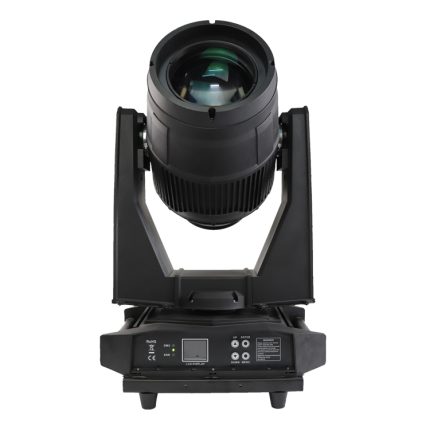
Outdoor waterproof 350W beam moving head light
-
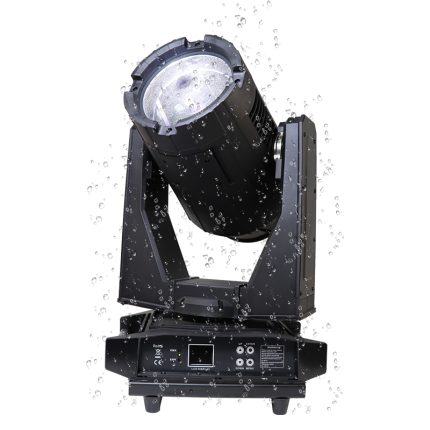
Outdoor 380W Waterproof Beam Pattern Wash 3-in-1 Moving Head Light
-
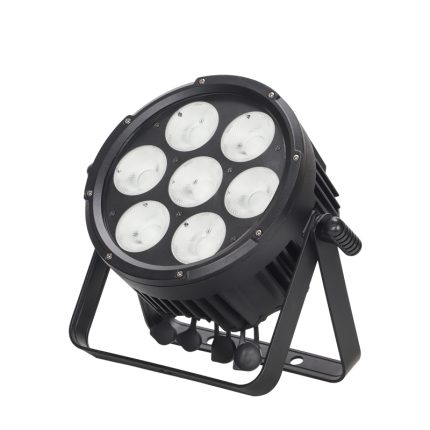
Outdoor waterproof 7x40w COB RGBW 4 in 1 LED par light
-
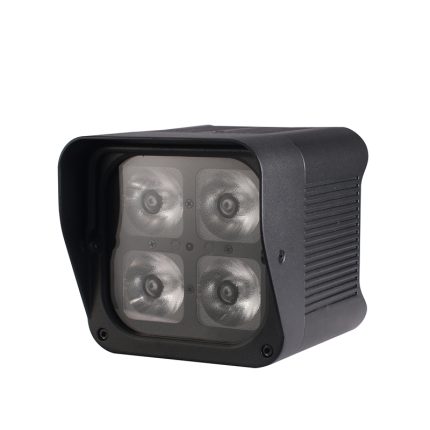
Outdoor Waterproof 4x20W 6-in-1 LED Wireless Battery Par Light
-
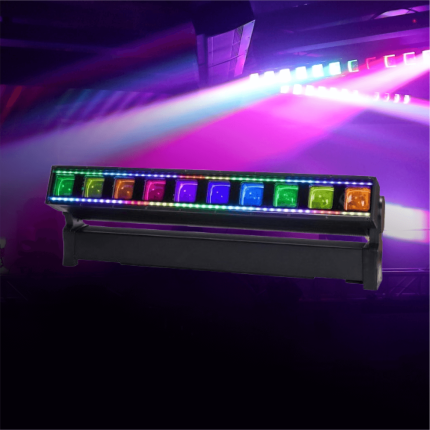
Rattlesnake 10x60W IP67 Waterproof Moving Head
-
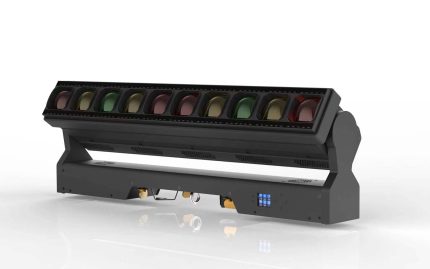
Outdoor waterproof 10x60w single point control beam dye focus LED bar moving head light LED backlight
-
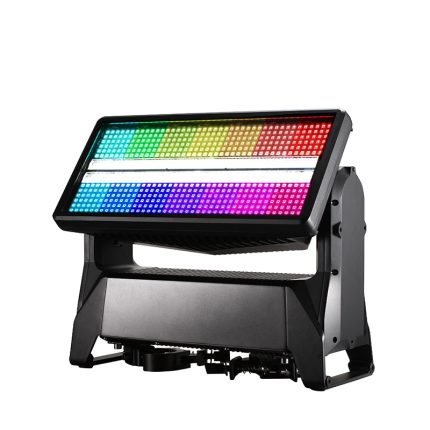
Artnet Outdoor Waterproof 1800w Moving Head LED Strobe Light
-
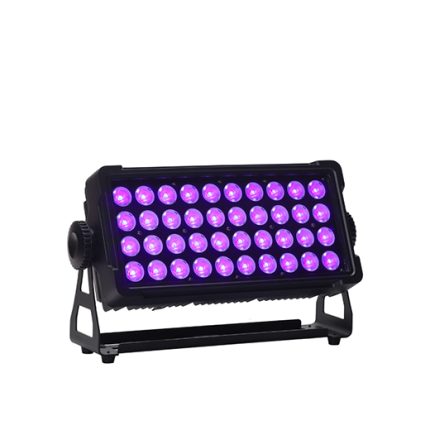
Outdoor waterproof 40 10W UV purple LED city light
-
Outdoor waterproof 4x20W 6-in-1 LED wireless battery par light with single-point control